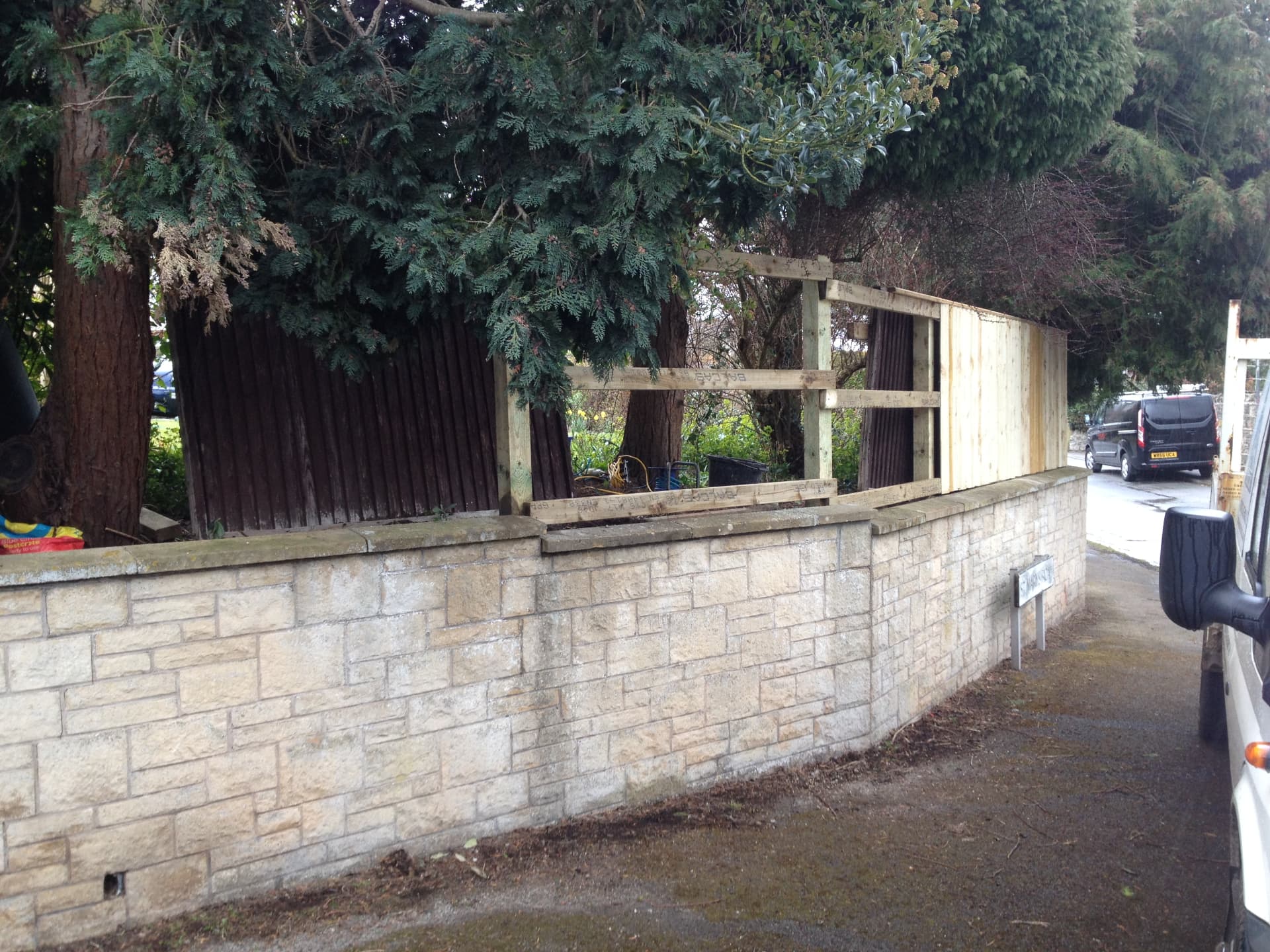
If your fence has blown down, a repair is usually enough when the posts are still solid and only the panels or boards have gone. If several posts have snapped or rotted at ground level, replacing that run is normally the better option.
Storms are hard on exposed gardens around Portishead, Clevedon and Weston-super-Mare. Here is what to do first, and how to tell which kind of damage you are looking at.
Make it safe first
Before you think about cost, deal with anything that could fall or blow about.
- Stay clear of leaning sections while it is still windy. A loose panel acts like a sail and can swing or drop without warning.
- Once the wind drops, lay any hanging panels flat on the ground or weigh them down so they cannot move.
- Keep children and pets away from broken timber, nails and screws.
- Check your garden is still secure. If you have a dog, or the fence closed off a side path, you may need a temporary fix.
- Take photos of the damage before you clear anything. You may need them for insurance or to show your neighbour.
Do not try to refit panels on your own in strong wind. It is not worth getting hurt.
Check who owns the fence
If the fence is on a boundary, find out whose it is before you arrange a repair. The answer is usually in your title deeds or title plan, not in the old idea that your fence is the one on the left. My guide on which fence is mine explains how to check.
If it belongs to your neighbour, talk to them first. If it is shared, agree how you will split the job. If it is yours, the decision is yours, but it is still polite to let them know when work is happening.
Will home insurance cover a fence blown down in a storm?
It might, but do not count on it. Many home insurance policies exclude fences, gates and hedges from storm cover, or only pay out if other parts of the property were damaged at the same time. Others do cover fences, but may refuse a claim if the posts were already rotten, as wear and tear is not usually covered.
Read your policy wording or ring your insurer before you commit to anything. If you do claim, your photos and the date of the storm will help. If your neighbour's fence has landed in your garden, speak to them first, as putting it right is usually down to the owner.
Rotten posts or blown-out panels?
This is the question that decides most jobs. Have a close look at where the fence actually failed. These are signs the posts are the problem:
- Timber posts snapped off at or just below ground level. This is where rot starts, because the wood stays damp.
- Wood at the base that is soft, dark or crumbly. If a screwdriver pushes in easily, the post is rotten.
- Posts that rock in the ground, or concrete around the base that has cracked or lifted.
- The whole run leaning one way, not just one panel.
If the posts are still upright and firm, and the panels have popped out of concrete post slots, split, or pulled away from their fixings, it is usually only the panels. That is normally a straightforward repair.
When to repair and when to replace
A repair usually makes sense when:
- The posts are sound and only one or a few panels or boards are damaged
- The fence is fairly new and the rest of the timber is in good condition
- A single post has snapped and the ones either side are solid
Replacing the run is usually better value when:
- Several posts have rotted at the base, as the rest are likely to follow
- The panels are old, brittle or already patched from earlier repairs
- The same stretch comes down in every storm
- You want a different height or style anyway
I will always tell you honestly which one I think it needs. If a repair will do the job, that is what I will recommend.
Concrete or timber posts?
If posts need replacing, it is worth thinking about which type to use.
- Concrete posts do not rot. Panels slide into slots, so in a very strong wind a panel may pop out, but it can often be put back. They are heavier and plainer to look at.
- Timber posts look more natural and suit feather-edge and close-board fencing built on site. Pressure-treated posts set properly last well, but the part in the ground will eventually rot.
In exposed gardens, solid lap panels catch a lot of wind. Close-board and feather-edge fencing on concrete posts with gravel boards generally lasts longer, and single boards can be replaced without rebuilding the whole run. I fit both concrete and timber posts, and will suggest what suits your ground and how exposed your garden is.
Fence repairs in Portishead, Clevedon and Weston-super-Mare
If a storm has taken your fence down, I can help. I replace storm-damaged panels, renew snapped or rotten posts, straighten leaning runs and take all the broken timber away legally as a registered waste carrier. I try to get to urgent storm damage as quickly as I can, especially where a garden is no longer secure. See my fence repair and fence installation pages, or the areas I cover in Portishead and Weston-super-Mare. Quotes are free. Call me on 07976 165908.