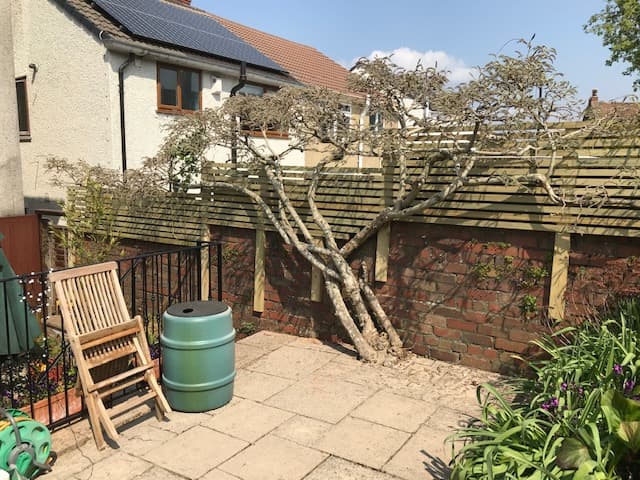
Planning a privacy screen
In England a fence or screen on a boundary can usually be up to 2 metres high without planning permission, or 1 metre next to a road or its footpath. If a screen is fixed on top of a wall or an existing fence, the combined height is generally what counts, and trellis on top is usually treated as part of the fence. Listed buildings, conservation areas and some newer estates with planning conditions have extra rules, so I'll suggest checking with North Somerset Council where that applies.
Screens on raised decking need extra thought. Decking more than 30 centimetres above the ground isn't covered by permitted development, and a screen on top of it adds height again. Often the better answer is a screen set back from the boundary, close to where you sit, which blocks the view that matters without towering over the neighbours.
Privacy screening is especially popular in gardens that are overlooked on newer estates in Nailsea and Portishead. If you're replacing the whole boundary, a taller close-board fence may be the simpler option, and a matching side gate can finish the job. If you're unsure whose fence it is before building alongside it, read which fence is mine. Get in touch to talk it through.